Fair Housing
Housing discrimination is illegal in nearly all types of housing, including private housing, public housing, and housing that receives federal funding. The Fair Housing Act protects individuals from discrimination when renting or buying a home, obtaining a mortgage, seeking housing assistance, or participating in other housing-related activities. Additional protections apply to federally-assisted housing.
Learn about the History of the Fair Housing Act, and read Examples of the many forms of housing discrimination.
-
The Fair Housing Act prohibits discrimination in housing because of:
Race
Color
National Origin
Religion
Sex (including gender identity and sexual orientation)
Familial Status
Disability
-
The Fair Housing Act covers most housing. However, in very limited circumstances, the Act exempts owner-occupied buildings with no more than four units, single-family homes rented or sold by the owner without the use of an agent, and housing operated by religious organizations or private clubs that limit occupancy to members.
-
Fair Housing Rights
The Fair Housing Act makes it illegal to discriminate in housing based on race, color, religion, sex (including gender identity and sexual orientation), disability, familial status, or national origin.
Sale and Rental of Housing
Under the Fair Housing Act, it is illegal to:
Refuse to rent or sell housing
Refuse to negotiate for housing
Make housing unavailable
Set different terms, conditions, or privileges for housing
Provide different housing services or facilities
Falsely deny housing availability
Use discriminatory advertising or statements
Charge different prices or apply different fees or requirements
Use different application, qualification, or approval standards
Evict tenants or their guests based on protected characteristics
Harass or intimidate individuals
Fail to provide or delay maintenance or repairs
Limit access to housing services or amenities
Steer individuals to certain neighborhoods or buildings
Engage in “blockbusting” practices
Discriminate in homeowners insurance
Deny access to real estate listings or organizations
Mortgage Lending
It is also illegal to discriminate in housing-related lending by:
Denying mortgage loans or financial assistance
Refusing to provide loan information
Offering different loan terms, rates, or fees
Discriminating in property appraisals
Conditioning loans based on harassment responses
Refusing to purchase loans
Harassment
The Fair Housing Act prohibits harassment based on any protected characteristic, including sexual harassment. Individuals are protected when seeking housing or exercising their fair housing rights.
Retaliation and Interference
It is illegal to:
Threaten, coerce, intimidate, or interfere with fair housing rights
Retaliate against anyone who files a complaint or participates in an investigation
Rights for Persons With Disabilities
Housing providers must provide reasonable accommodations and allow reasonable modifications when necessary to ensure equal access to housing. Certain multifamily housing must also meet accessibility standards.
-
California Fair Housing & Civil Rights Protections
California’s Fair Employment and Housing Act (FEHA) applies to most housing providers and housing-related services, including landlords, tenant screening companies, real estate agents, home sellers, builders, mortgage lenders, and housing authorities.
FEHA prohibits discrimination and harassment against tenants, homeowners, housing applicants, buyers, residents, and their guests.
The Unruh Civil Rights Act also protects individuals from discrimination by businesses, including many housing providers, based on protected characteristics.
Examples of Prohibited Discriminatory Actions
Housing discrimination may include, but is not limited to:
Refusing to sell, rent, or lease housing (apartments, homes, condos, mobile homes, or rooms)
Refusing to negotiate housing transactions
Falsely stating that housing is unavailable when it is actually available
Denying home loans or homeowners insurance
Cancelling or terminating housing agreements based on protected characteristics
Refusing reasonable disability-related modifications (e.g., ramps, grab bars, widened doorways) when required and at the tenant’s expense
Refusing reasonable accommodations in housing rules, policies, or services for persons with disabilities
Imposing rules that unfairly restrict families with children (e.g., banning children from pools or common areas)
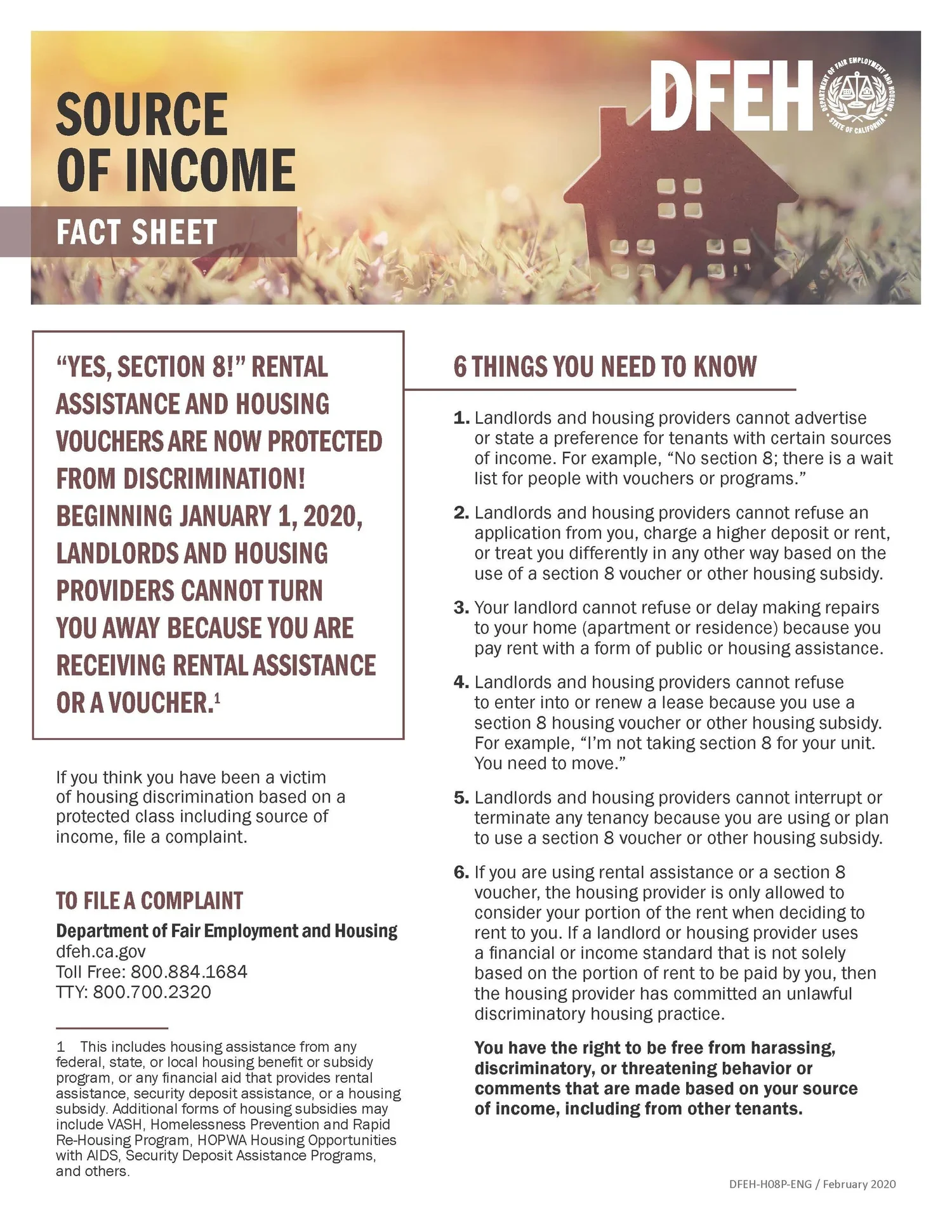
Refusing to rent to individuals using Section 8 or other rental assistance programs
Failing to comply with housing subsidy requirements (e.g., refusing paperwork, signatures, or inspections)
Discriminating in tenant screening, including through third-party screening companies
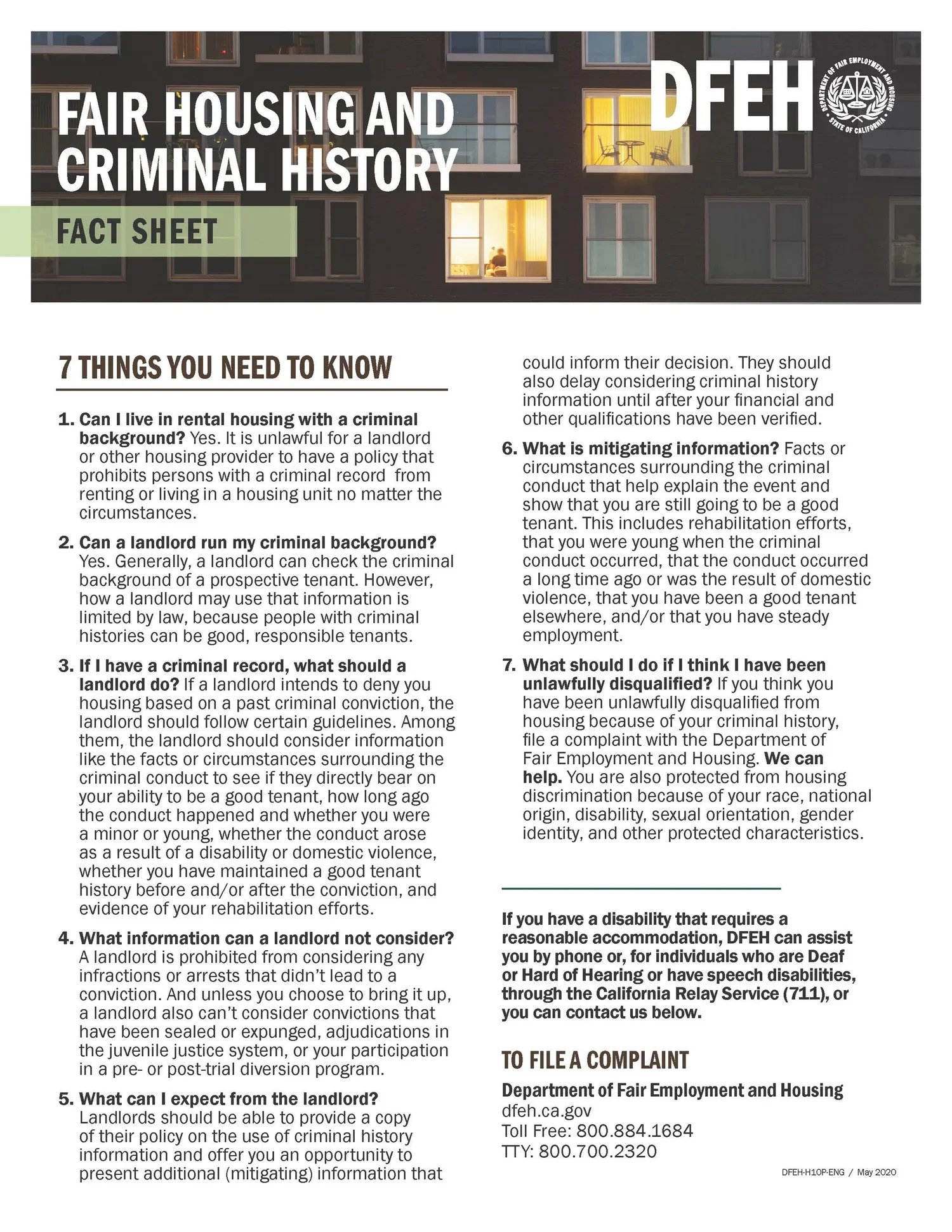
Refusing to rent based on criminal history when used in a discriminatory manner
Retaliating against individuals for filing complaints, requesting accommodations, or asserting their rights
Additional Protections Under California Law
California law protects individuals from discrimination and harassment based on protected characteristics, whether actual or perceived.
Protections also apply when discrimination is based on:
Multiple intersecting characteristics (e.g., race and disability together)
A person’s association with someone who has a protected characteristic (such as a family member, roommate, or friend)
-
Housing Discrimination Isn’t Always Obvious
Housing discrimination can take many forms. The examples below illustrate how discrimination may occur in ways that are not immediately apparent.
Example #1: Race-Based Discrimination
John, a Black man, speaks with a prospective landlord by phone about renting an apartment. The landlord seems eager to rent to him. However, when John meets the landlord in person to complete the application, the landlord’s attitude changes.
A few days later, John receives a denial letter stating his application was rejected due to a negative reference from his current landlord. John is surprised because he has never had issues with his landlord, who confirms she was never contacted for a reference.
Suspecting discrimination, John files a complaint with HUD. An investigation later confirms a pattern of discrimination based on race and color.
Example #2: Religious Discrimination
Jane is a Muslim woman who wears a hijab. She visits a leasing office after seeing a sign advertising available units. When she arrives, the leasing agent immediately tells her there are no vacancies. Jane asks to be placed on a waiting list but never receives a follow-up call.
Believing she was treated unfairly because of her religion, Jane files a complaint with HUD. An investigation reveals supporting evidence from other employees confirming discriminatory practices based on religion.
-
Anyone who feels he, she, or they have been discriminated against may file a complaint of housing discrimination:
1-800-669-9777 (Toll Free)
1-800-9275 (TTY)
Brochure in English and Spanish
Summit a Claim www.hud.gov/fairhousing
U.S. Department of Housing and Urban Development
Assistant Secretary for Fair Housing and Equal Opportunity
Washington, D.C. 20410
Additional Fair Housing Information
Central California Legal Services (CCLS):CCLS is a private, non-profit, public interest law firm established for the purpose of providing free civil legal assistance to low-income individuals, families, organizations and communities. They can provide legal help with Housing, Health, Guardianship, Family Violence, Utilities, Seniors, Employment, and Benefits, Legal Advice and Referral Lines. Please call 1(800)675-8001 or visit https://centrallegal.org/ for locations and hour of operation.
Fair Housing Council of Central California: The Fair Housing Council of Central California is a professional, non-profit, civil rights organization dedicated to the elimination of discrimination in housing and the expansion of housing opportunities for all persons.
Department of Fair Employment and Housing - State of California: The Civil Rights Department is the state agency charged with enforcing California's civil rights laws. The mission of the CRD is to protect the people of California from unlawful discrimination in employment, housing, businesses, and state-funded programs, and from bias-motivated violence and human trafficking.
Know Your Housing Rights Fact Sheet
View in English (PDF), in Chinese (PDF), in Korean (PDF), in Spanish (PDF), in Tagalog (PDF), in Vietnamese (PDF)
California Tenants Guide
A guide to residential tenants’ and landlords’ rights and responsibilities.